Google advertisers have previously criticized the company's
excessive advertising automation. Now, companies using generative artificial intelligence (AI) have begun to automate the entire ad supply chain.
A new agentic AI platform launched
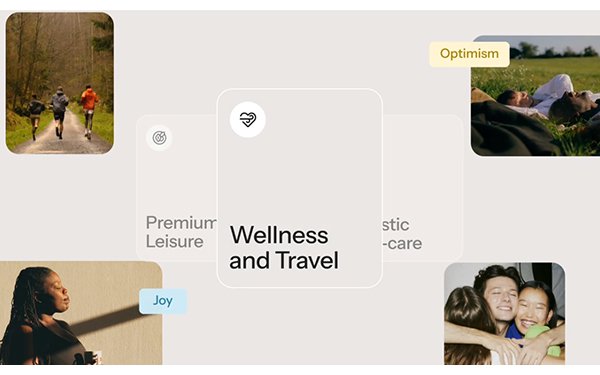
last week to help brands and agencies plan and activate media campaigns using what the company calls a "neuro-contextual intelligence" technology attempt to identify a consumer’s emotions at the
time that person considers a purchase.
Liz, the agent, is powered by Seedtag’s neuro-contextual data and runs through a conversational interface -- with text and voice -- that acts
as an assistant to carry out processes.
“The majority of the industry are still stuck chasing and trying to find consumers in browsers or wherever the technology allows advertisers to
change them,” Seedtag CTO Kartal Goksel told MediaPost.
advertisement
advertisement
The ad process begins with a campaign brief in Seedtag’s technology, as seen recently in other platforms like Luma AI.
However, the new agent then transitions into a full, running campaign that builds custom audiences from mapping data, real-time insights and competitive data. It can carry out competitive analysis and
recommendations for targeting, creative and messaging.
The agent scans web content in real-time, processing millions of signals from publishers to understand the content of the page.
The contextual graph identifies about 10 million URLs daily. It detects interest, the topics the user cares about; emotion, tone or mood of the content, and intent -- whether the person is
researching, browsing, or ready to make a purchase. It then builds a contextual audience and then recommends and launches campaigns.
When the campaign concludes, the platform generates
performance metrics, reports, and then takes what it has learned and applies that to use for the next campaign, Goksel told MediaPost.
“Our focus is on contextual and content, not on
specific users,” he said.
Many companies are still stuck, but he believes Seedtag’s “'contextual graph'" can provide network-level analysis as close to real time as
possible.
Machine learning and natural language understanding classify the content. Signals come from extracting the content, Goksel explained, and from there, human interest, emotions, and
intent are predicted.
“All the signals are combined to bring the signals together,” Goksel said. “Then the data is fine-tuned through models.”