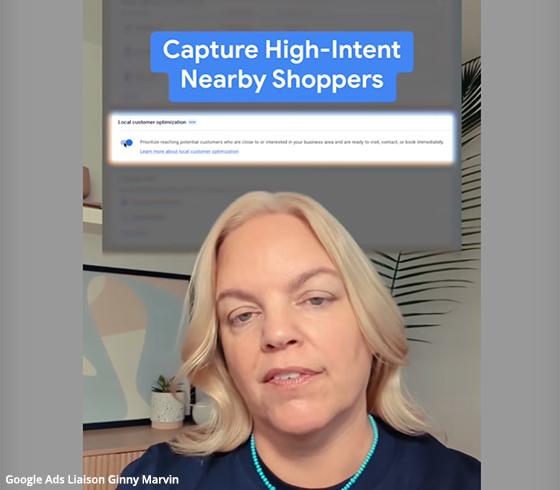
Reaching shoppers with digital ads at the moment they are ready
to visit a store or when are already nearby a store may look different this year as the holidays approach.
On Tuesday, Google added two new updates that help brick-and-mortar stores connect
digital ad campaigns for local buyers with activity inside stores. The tools also measure results from online ads that drive in-person sales.
“Combined, these two updates are
designed to make it easier to unite real-time navigation signals on the front end with seamless offline revenue measurement on the back end,” Google Ads Liaison Ginny Marvin wrote in a post on
LinkedIn.
The updates focus on reaching nearby consumers who appear ready to visit a local store, making it easier to connect in-store purchases back to Google Ads.
These are two major challenges for location-based marketer and advertisers.
advertisement
advertisement
The rollout of these two features is a major push by Google to bridge the gap between online searches
and physical foot traffic.
“Local Customer Optimization,” a new campaign setting in Performance Max (PMax), focuses on local demand for products when consumers are looking for
specific products nearby.
The system identifies intent signals when people plan trips or searches for a location across other Google products such as Maps, Waze, and Search when consumers are
actively and physically calling or looking for products in nearby physical stores.
This link enables advertisers to measure, optimize and find online users who are statistically most
likely to walk into real-world stores and make a purchase. The product is rolling out now.
Another tool announced Tuesday allows advertisers to connect existing sales data from sources such as
a CRM or Google Sheets directly in their Google Ads account.
Determining when an ad campaign drives an in-person visit has traditionally been a challenge. Rather than complex custom coding
or manual data entry, "Store Sales in Google Ads Data Manager" allows businesses to sync their existing sales data, when eligible.
This feature identifies the online campaigns that have resulted
in real-world holiday purchases at store registers.
The platform matches the offline records against ad
interactions behind the scenes, giving retailers clear visibility into the online campaigns that generate revenue at the register.
There are several Store Sales measurement requirements that
include being a retailers, restaurant, automotive OEM (Original Equipment Manufacturer, and telecommunications provider.
Supported platforms include Google Ads, and Search Ads 360, but there
are several requirements, which include: stores must have approximately 300,000 store visits in the past 90 days, more than
500,000 aggregate account-level ad interactions over the last 90 days, and sales measurements require store visit reporting based on location assets.
Automotive retail stores must receive
store-visit reporting based on affiliate location assets.
Both updates arrive as retailers prepare for the holiday shopping season in the final quarter of 2026.